Using a group of three sculptures rather than a single piece is one of the most effective ways to create a visually engaging and balanced space. This principle is deeply rooted in design theory and is often referred to as the “rule of three,” a concept that appears across art, architecture, photography, and landscape design. When applied to sculptures, grouping three pieces together introduces a sense of harmony, movement, and visual interest that a single sculpture often cannot achieve on its own.
One of the key reasons three sculptures are more visually appealing is because they create a natural sense of balance without feeling overly symmetrical or rigid. A single sculpture can sometimes feel isolated or static, especially in a large outdoor setting. It may struggle to command attention unless it is significantly oversized or highly intricate. In contrast, three sculptures work together to form a composition. Even if each piece is relatively simple, their combined presence creates a stronger visual statement. The eye is naturally drawn to the relationship between the pieces, rather than focusing on just one object.
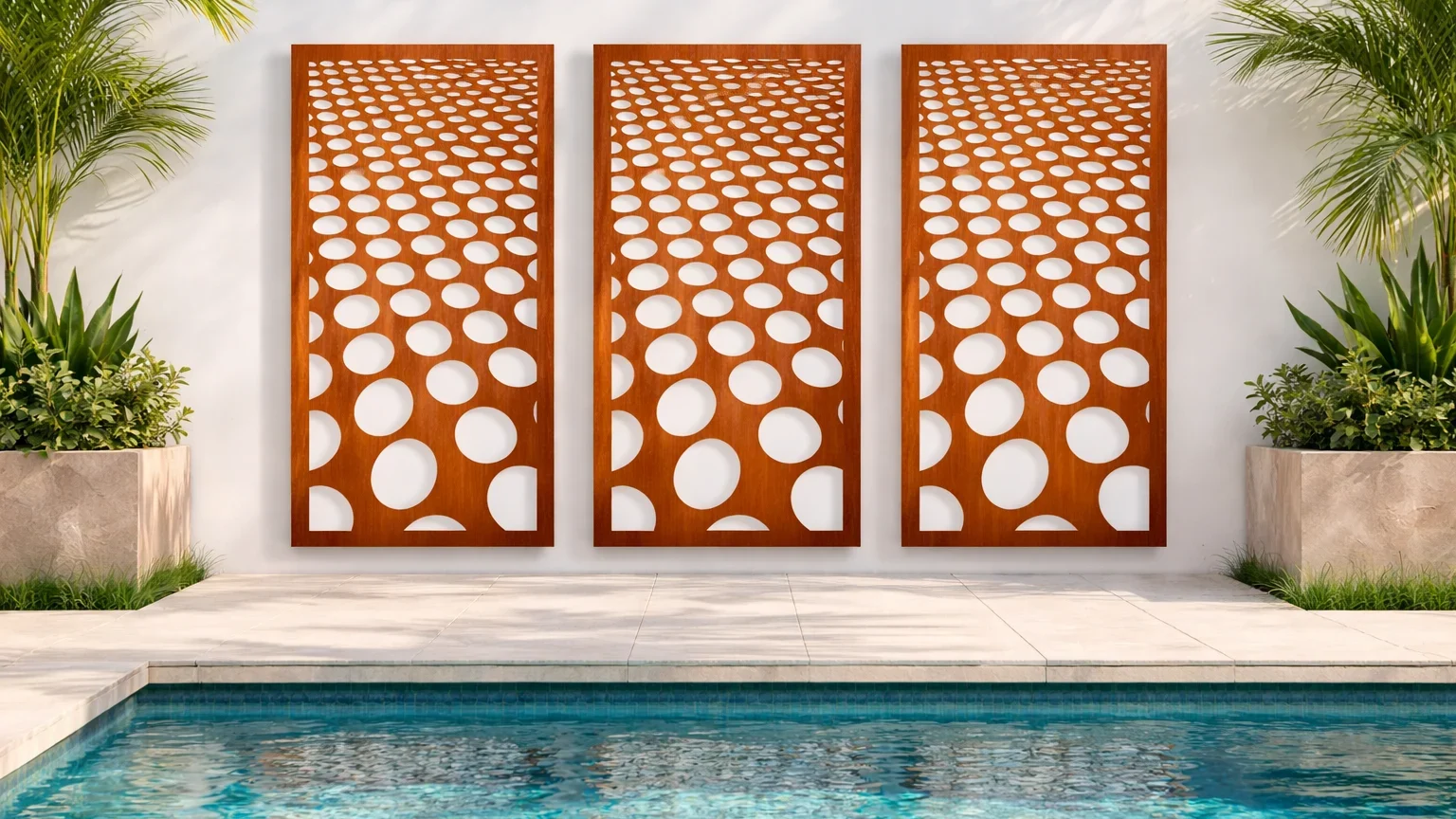
Privacy Screens – Iron Leaf Studio
Another advantage of using three sculptures is the way they guide the viewer’s eye. With a single piece, the viewer’s attention lands and often stops there. There is little movement or journey for the eye to follow. However, when three sculptures are placed together, they create a visual pathway. The eye moves from one piece to the next, exploring their differences and connections. This creates a more dynamic and engaging experience. Whether the sculptures are arranged in a straight line, a triangular formation, or a slightly staggered layout, they encourage interaction and curiosity.
The variation between three sculptures also adds depth and dimension to a space. This doesn’t necessarily mean the designs need to be different—often, using the same design in varying sizes or orientations can be even more effective. For example, three sculptures of identical style but different heights can create a sense of progression and scale. The tallest piece can act as a focal point, while the smaller pieces support and complement it. This layered effect gives the display a sense of purpose and structure, making it feel thoughtfully designed rather than randomly placed.
In outdoor environments, such as gardens or along a fence line, three sculptures can help anchor a space more effectively than one. A single sculpture may feel lost within the surrounding landscape, especially when competing with plants, textures, and natural elements. A group of three, however, establishes a stronger presence. It creates a feature area that stands out while still blending naturally into its surroundings. The repetition of form helps tie the space together, making it feel cohesive and complete.
There is also a psychological aspect to why groups of three are more appealing. Humans tend to find odd numbers more visually interesting than even numbers. Even-numbered groupings can feel too symmetrical and predictable, while odd numbers create a sense of tension and intrigue. Three is the smallest number that allows for this effect. It provides enough variation to feel dynamic, but not so much that the arrangement becomes cluttered or overwhelming. This makes it an ideal choice for both small and large spaces.
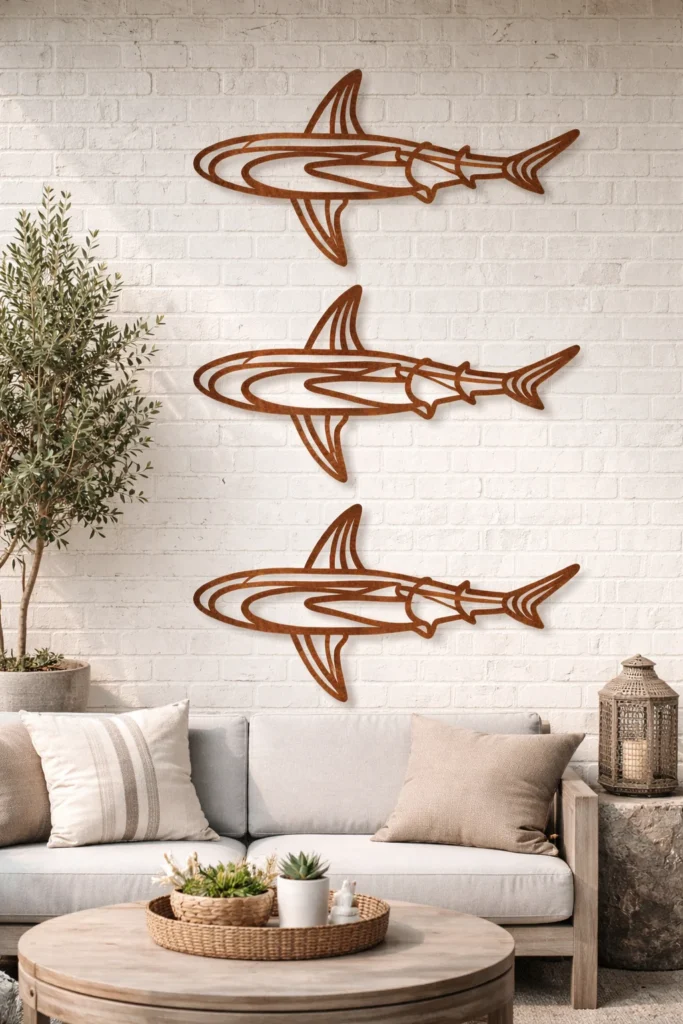
Shark 1 Metal Wall Art – Iron Leaf Studio
Lighting and shadows further enhance the impact of three sculptures. As the light changes throughout the day, each piece casts its own shadow, creating layers of texture and movement. With a single sculpture, the shadow effect is limited. With three, the interplay between light and shadow becomes far more complex and visually striking. This is particularly effective with metal sculptures, such as those made from Corten steel, where cut-out designs allow light to pass through and project patterns onto surrounding surfaces.
From a design perspective, three sculptures also offer greater flexibility. They can be arranged in numerous ways to suit different environments and preferences. A vertical arrangement works well on walls or fences, drawing the eye upward and adding height to a space. A horizontal layout is ideal for longer areas, such as along a pathway or garden bed, creating a sense of flow and continuity. A triangular arrangement can add depth and make the display feel more organic and less structured. This versatility allows designers and homeowners to tailor the display to their specific space while still achieving a cohesive look.
In addition, three sculptures allow for storytelling and thematic expression. Each piece can represent a different element, stage, or idea, contributing to a larger narrative. For example, in a nature-inspired setting, three sculptures might depict different animals, plants, or seasonal changes. Together, they create a richer and more meaningful visual experience than a single piece could convey. This storytelling aspect adds emotional value and makes the display more memorable.
Finally, a group of three sculptures simply feels more complete. A single piece can sometimes appear as though something is missing, especially in larger or more open spaces. Three pieces, on the other hand, fill the space in a balanced and intentional way. They create a focal point that feels substantial without being overwhelming. This sense of completeness is one of the main reasons why designers consistently turn to groups of three when creating visually appealing environments.
In conclusion, while a single sculpture can certainly make an impact, a group of three offers a far more dynamic and engaging result. Through balance, movement, variation, and visual storytelling, three sculptures work together to create a composition that is both aesthetically pleasing and highly effective. Whether used in a garden, on a wall, or within a larger landscape design, grouping sculptures in threes is a simple yet powerful way to elevate the overall look and feel of a space.
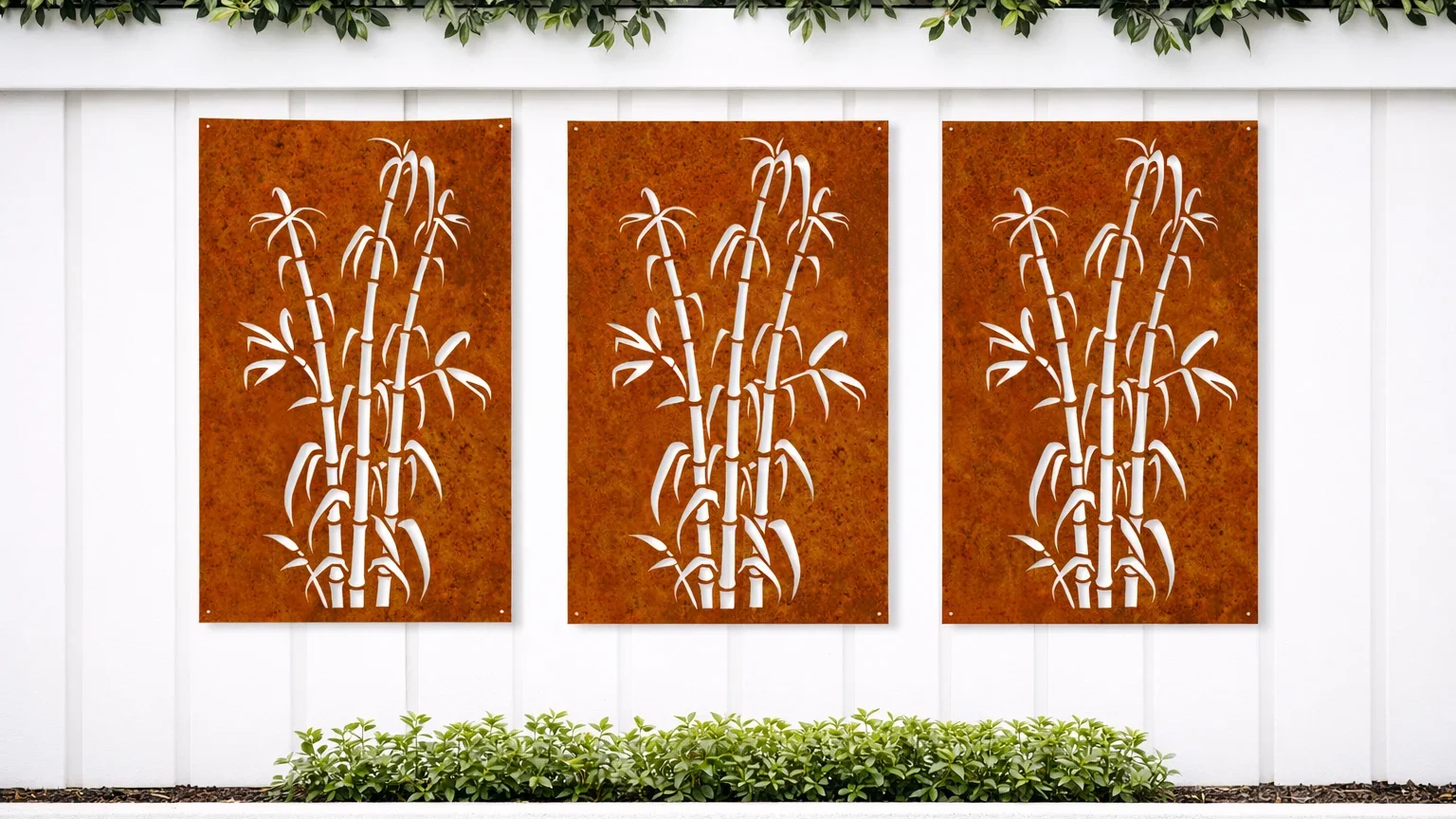
Bamboo Metal Wall Art – Corten Steel – Iron Leaf Studio