Corten steel and mild steel garden edging are two of the most popular choices for defining garden beds, pathways, and landscaped areas, offering a clean, professional finish while improving the structure and longevity of outdoor spaces. Both materials provide practical benefits, but each brings its own unique characteristics in terms of appearance, durability, and long-term performance, making them suitable for different applications and design preferences.
Garden Edging – Iron Leaf Studio
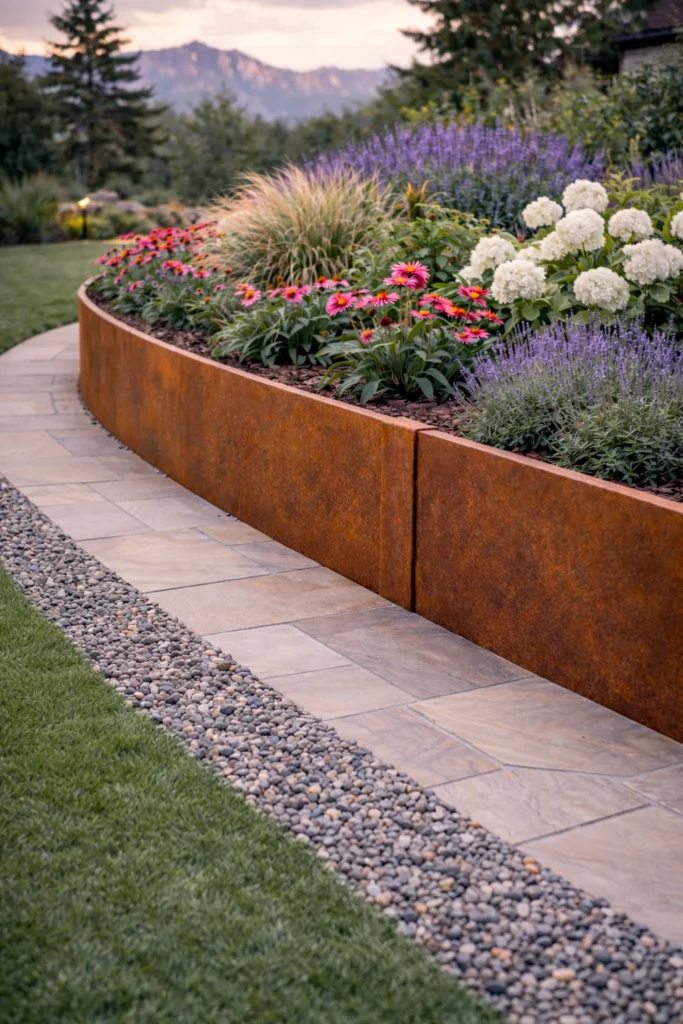
Corten steel garden edging is widely recognised for its ability to develop a natural rustic patina over time. This weathering process is what sets it apart from other materials. When exposed to the elements, Corten steel forms a stable outer layer that protects the inner core from corrosion. This means that instead of rusting away like standard steel, it actually becomes more resilient as it ages. The resulting finish is a rich blend of warm, earthy tones that sit beautifully within natural landscapes, complementing greenery, soil, stone, and timber. This evolving appearance gives Corten edging a unique, organic look that improves with time and adds character to any garden setting.
In addition to its visual appeal, Corten steel is highly durable and built to withstand harsh outdoor conditions. It performs exceptionally well in Australia’s climate, handling everything from intense sun exposure to heavy rain without the need for painting or sealing. This makes it a low-maintenance solution for homeowners and landscapers who want a long-lasting product without ongoing upkeep. Typically manufactured from around 2 mm thick steel, Corten edging strikes a balance between flexibility and strength, allowing it to be shaped around curves while still maintaining structural integrity.
Mild steel garden edging, on the other hand, offers a more cost-effective and versatile option. It is often chosen for projects where budget is a key consideration or where a different finish is desired. Mild steel has a smooth, clean surface that can be left raw to develop a natural weathered look similar to Corten, although it does not form the same protective patina. As a result, mild steel may gradually corrode over time if left untreated, particularly in areas with high moisture or exposure to irrigation systems. However, this can be managed through protective coatings such as galvanising, painting, or powder coating, which extend its lifespan and allow for a wider range of colour options.
One of the key advantages of mild steel edging is its flexibility in design and finish. It can be customised to suit both modern and traditional landscapes, whether that means a sleek black powder-coated edge for a contemporary garden or a simple raw finish for a more industrial look. Like Corten steel, mild steel edging is typically available in similar thicknesses and dimensions, making it easy to install and work with across a variety of garden layouts. It can be used to create straight lines, gentle curves, or more intricate shapes, helping to define garden beds with precision.
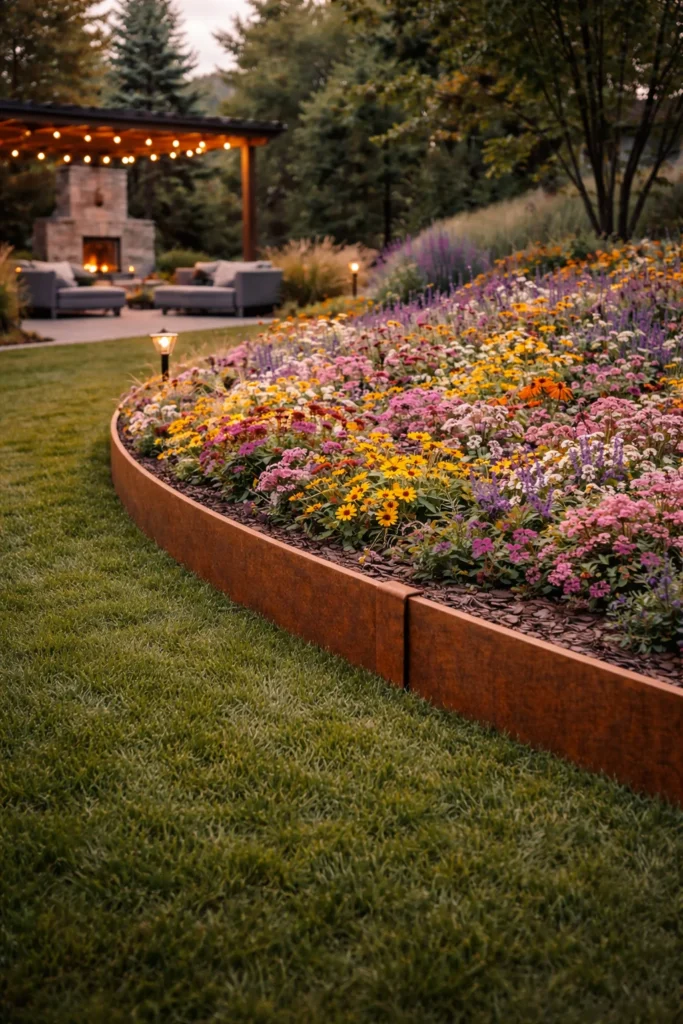
Both Corten and mild steel edging play an important role in maintaining the structure of a garden. By creating a clear boundary between lawn and garden beds, they help prevent soil movement, reduce weed spread, and keep mulch and decorative materials neatly contained. This not only improves the appearance of the garden but also reduces ongoing maintenance, making it easier to manage over time. Clean, well-defined edges can significantly enhance the overall look of a landscape, giving it a polished and professionally finished feel.
Installation for both materials is relatively straightforward, particularly when paired with matching steel stakes designed to secure the edging firmly in place. These stakes, 2 mm thick, are driven into the ground to hold the edging at the desired height and alignment. This ensures stability even in changing weather conditions and allows the edging to maintain its shape over the long term. The ability to install edging in lengths ranging from one metre to three metres, often available individually or in cost-effective bundles, makes it a flexible solution for projects of all sizes.
Garden Edging – Iron Leaf Studio
When choosing between Corten steel and mild steel garden edging, the decision often comes down to the desired aesthetic and level of maintenance. Corten steel is ideal for those who want a premium, long-lasting product with a distinctive rustic patina that requires little to no upkeep. It is particularly well suited to natural, native, or contemporary landscapes where its warm tones can shine. Mild steel, by contrast, offers greater flexibility in finish and a lower upfront cost, making it a practical choice for a wide range of projects, especially where protective coatings are applied to extend its life.
Ultimately, both Corten steel and mild steel garden edging provide reliable, durable solutions for creating clean lines and enhancing outdoor spaces. Their strength, adaptability, and professional finish make them essential elements in modern landscaping, helping to bring structure, order, and visual appeal to gardens of all styles. Whether you are aiming for a bold architectural statement or a subtle, natural boundary, these materials offer the versatility and performance needed to achieve a high-quality result that stands the test of time.